Common Knife Performance Terms and Explanations
Below is a concise glossary of the terms most often used when discussing kitchen-knife performance. Each entry pairs a clear definition with a plain-language explanation of the factors that influence the property in real-world use.
Hardness
Definition
The ability of a material to resist plastic or cutting deformation. It is a key metric for evaluating blade materials. Higher hardness mainly helps the edge resist deformation, which is especially important for cleavers and thin-bladed knives to maintain cutting ability and edge retention.
The ability of a material to resist plastic or cutting deformation. It is a key metric for evaluating blade materials. Higher hardness mainly helps the edge resist deformation, which is especially important for cleavers and thin-bladed knives to maintain cutting ability and edge retention.
Explanation
Factors that influence hardness:
Factors that influence hardness:
① Chemical composition (primary factor)
Carbon content is the foundation of hardness. Carbide-forming elements (Cr, V, Mo, W) increase wear resistance by forming hard carbides, yet excessive amounts can reduce matrix toughness.
Carbon content is the foundation of hardness. Carbide-forming elements (Cr, V, Mo, W) increase wear resistance by forming hard carbides, yet excessive amounts can reduce matrix toughness.
② Heat-treatment parameters (key control lever)
Specific settings such as temperature, time, and cooling rate. For example, quenching requires full austenitization (correct temperature and time) to avoid undissolved carbides; high-alloy steels usually need higher temperatures.
Specific settings such as temperature, time, and cooling rate. For example, quenching requires full austenitization (correct temperature and time) to avoid undissolved carbides; high-alloy steels usually need higher temperatures.
③ Crystal structure
Finer grain → higher hardness.
Higher martensite content → higher hardness, while retained austenite must be controlled.
④ Manufacturing process
Powder metallurgy achieves high hardness and wear resistance through ultra-fine grains and uniform carbide distribution.
Toughness
Definition
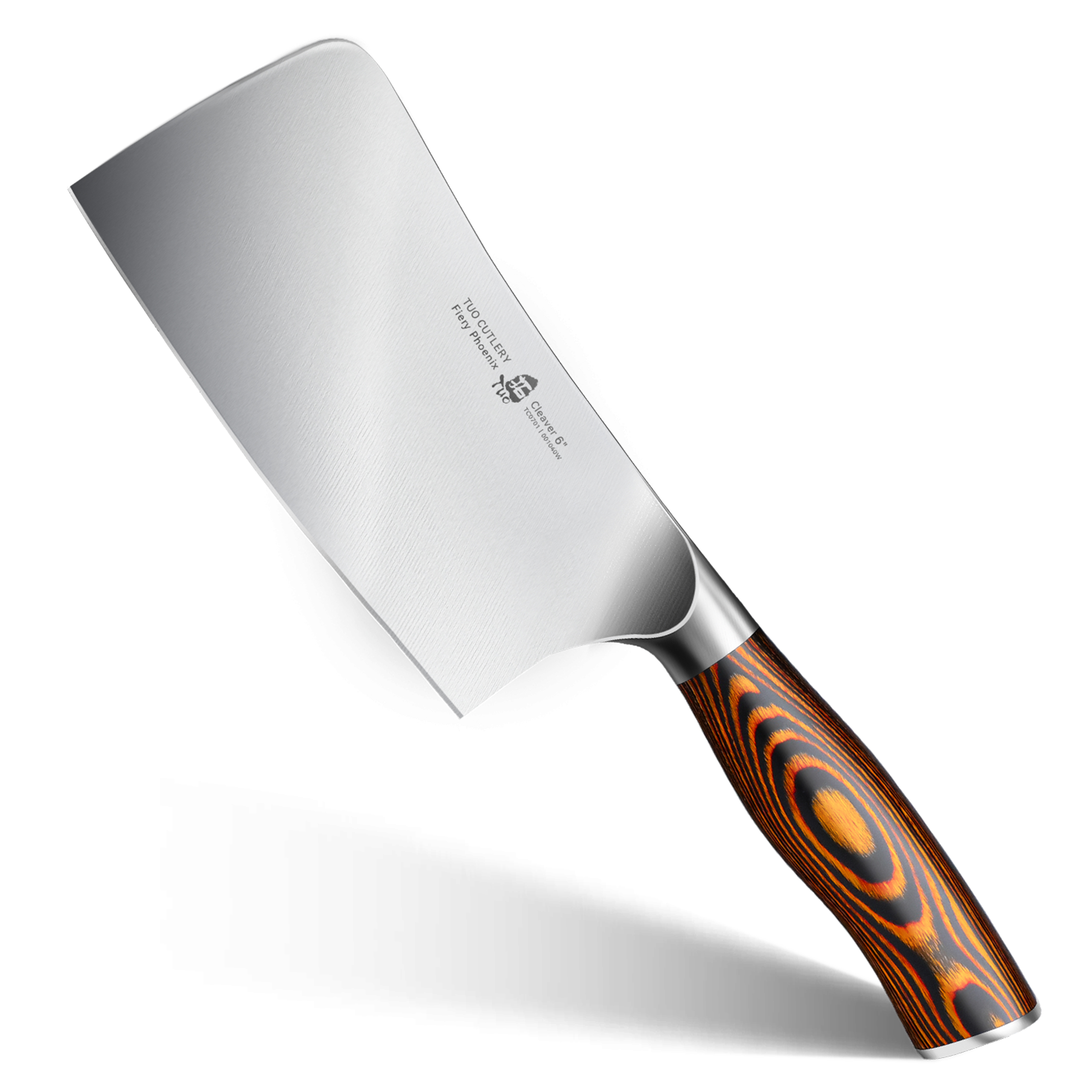
The ability to resist chipping or breaking. A tough steel can absorb impact without serious chipping or tip fracture. Steels with high hardness and wear resistance usually have lower toughness. For general-purpose knives, a balance of edge retention and toughness is ideal. High-toughness steels suit blades that may encounter heavy impact, such as large vegetable cleavers.
The ability to resist chipping or breaking. A tough steel can absorb impact without serious chipping or tip fracture. Steels with high hardness and wear resistance usually have lower toughness. For general-purpose knives, a balance of edge retention and toughness is ideal. High-toughness steels suit blades that may encounter heavy impact, such as large vegetable cleavers.
Explanation
Factors that influence toughness:
① Microstructure (primary factor)
Grain size and carbide distribution directly affect toughness. Fine grains impede crack propagation. Large carbides act as crack initiators; uniformly fine carbides (e.g., from powder metallurgy) improve toughness.
Grain size and carbide distribution directly affect toughness. Fine grains impede crack propagation. Large carbides act as crack initiators; uniformly fine carbides (e.g., from powder metallurgy) improve toughness.
② Alloy content
Each element has an “optimal window” (e.g., vanadium and chromium can help or hurt depending on amount).
③ Heat treatment
Proper quench and temper adjust microstructure to raise toughness. Controlling cooling rate and tempering temperature balances toughness and hardness.
④ Manufacturing process
Modern techniques such as powder metallurgy create more uniform microstructures, improving toughness. Not all PM steels are automatically tougher, however.
Edge Retention
Definition
The ability of the edge to stay sharp during cutting. A knife with high edge retention needs less frequent sharpening even after extended use or when cutting hard materials.
The ability of the edge to stay sharp during cutting. A knife with high edge retention needs less frequent sharpening even after extended use or when cutting hard materials.
Explanation
① Hardness (important but not sole factor), higher hardness usually improves edge retention, yet gains plateau above HRC 64-65. Beyond that point, carbide content becomes more critical. Some ultra-high-hardness steels (e.g., ZDP-189 at HRC 67) may underperform compared with CPM-10V at HRC 62 if the latter contains abundant vanadium carbides.
② Microstructure: carbide type, volume, and size.
③ Edge angle
Larger angle: more resistant to dulling, especially against impact or hard materials.
Smaller angle: sharper edge, but high-hardness steels such as Maxamet may chip if toughness is lacking.
Wear Resistance
Definition
The ability of the material to resist wear throughout its service life. A wear-resistant blade keeps a sharp edge longer. In short: high wear resistance = hard to abrade = harder to sharpen, low wear resistance = easy to abrade = easier to sharpen.
The ability of the material to resist wear throughout its service life. A wear-resistant blade keeps a sharp edge longer. In short: high wear resistance = hard to abrade = harder to sharpen, low wear resistance = easy to abrade = easier to sharpen.
Explanation
① Wear resistance is governed by carbides (type + volume), not hardness alone.
Example: CPM-10V (HRC 62, 12 % VC) > ZDP-189 (HRC 67, low VC).
① Wear resistance is governed by carbides (type + volume), not hardness alone.
Example: CPM-10V (HRC 62, 12 % VC) > ZDP-189 (HRC 67, low VC).
② Microstructural uniformity (powder metallurgy) markedly improves real-world wear resistance.
Ease of Sharpening
Definition
The ease with which a blade can be resharpened. A steel with good sharpenability regains its edge quickly with modest abrasive effort. Plain language: how easily you can bring a dull knife back to sharp.
The ease with which a blade can be resharpened. A steel with good sharpenability regains its edge quickly with modest abrasive effort. Plain language: how easily you can bring a dull knife back to sharp.
Explanation
① Carbide type (primary factor)
Ranking from hardest on abrasives to easiest: (VC, NbC) > Cr₇C₃ > Fe₃W₃C.
② Carbide size: fine carbides from PM processes are kinder to stones.
③ Very high hardness increases sharpening difficulty.
Corrosion Resistance
Definition
Knife-steel corrosion usually appears as rust, patina, or staining.
Knife-steel corrosion usually appears as rust, patina, or staining.
Explanation
Factors that influence corrosion resistance:
Factors that influence corrosion resistance:
① Chemical composition (primary factor)
Key alloying elements and their roles: (Cr/Mo/N/C).
Key alloying elements and their roles: (Cr/Mo/N/C).
② Surface treatments
Passivation, PVD coatings, and other surface technologies markedly improve corrosion resistance.
Passivation, PVD coatings, and other surface technologies markedly improve corrosion resistance.
③ Microstructure
Fine, uniform grains and a continuous protective film resist corrosion better. Large carbides (e.g., Cr₇C₃ in traditional D2) create local Cr-depleted zones that act as corrosion initiation sites.
④ Usage conditions
Continuous moisture, poor ventilation, or frequent contact with corrosive liquids all reduce corrosion resistance.
TCC (Total Cutting Cycles)
Definition
A metric that counts how many cutting cycles a knife can perform under set conditions before it loses sharpness. Plain language: how many effective cuts the knife can make before it is considered worn out.
A metric that counts how many cutting cycles a knife can perform under set conditions before it loses sharpness. Plain language: how many effective cuts the knife can make before it is considered worn out.
Explanation
① Hardness and wear resistance of the material affect durability and initial cutting performance.
Plain language: hardness determines “how much abuse it can take,” wear resistance determines “how long it lasts.”
② Edge geometry, angle, and coatings: good design raises cutting efficiency and extends service life.
ICP (Initial Cutting Performance)
Definition
Initial cutting performance. A measure of how well a knife performs on first use, including sharpness and wear resistance. A higher ICP number indicates better initial performance.
Initial cutting performance. A measure of how well a knife performs on first use, including sharpness and wear resistance. A higher ICP number indicates better initial performance.
Explanation
① Smaller edge angle → sharper edge → higher initial sharpness.
② Heat treatment affects hardness, wear resistance, and toughness, which together influence sharpness and edge stability.
Edge Angle
Definition
The bevel angle on each side of the blade.
The bevel angle on each side of the blade.
Explanation
Smaller angle → sharper edge → higher initial sharpness.
Larger angle increases blade thickness and structural strength, making the edge less prone to chipping or rolling during heavy tasks such as splitting, chopping, or hacking.
Smaller angle → sharper edge → higher initial sharpness.
Larger angle increases blade thickness and structural strength, making the edge less prone to chipping or rolling during heavy tasks such as splitting, chopping, or hacking.
Get the Goods and Start Cooking:
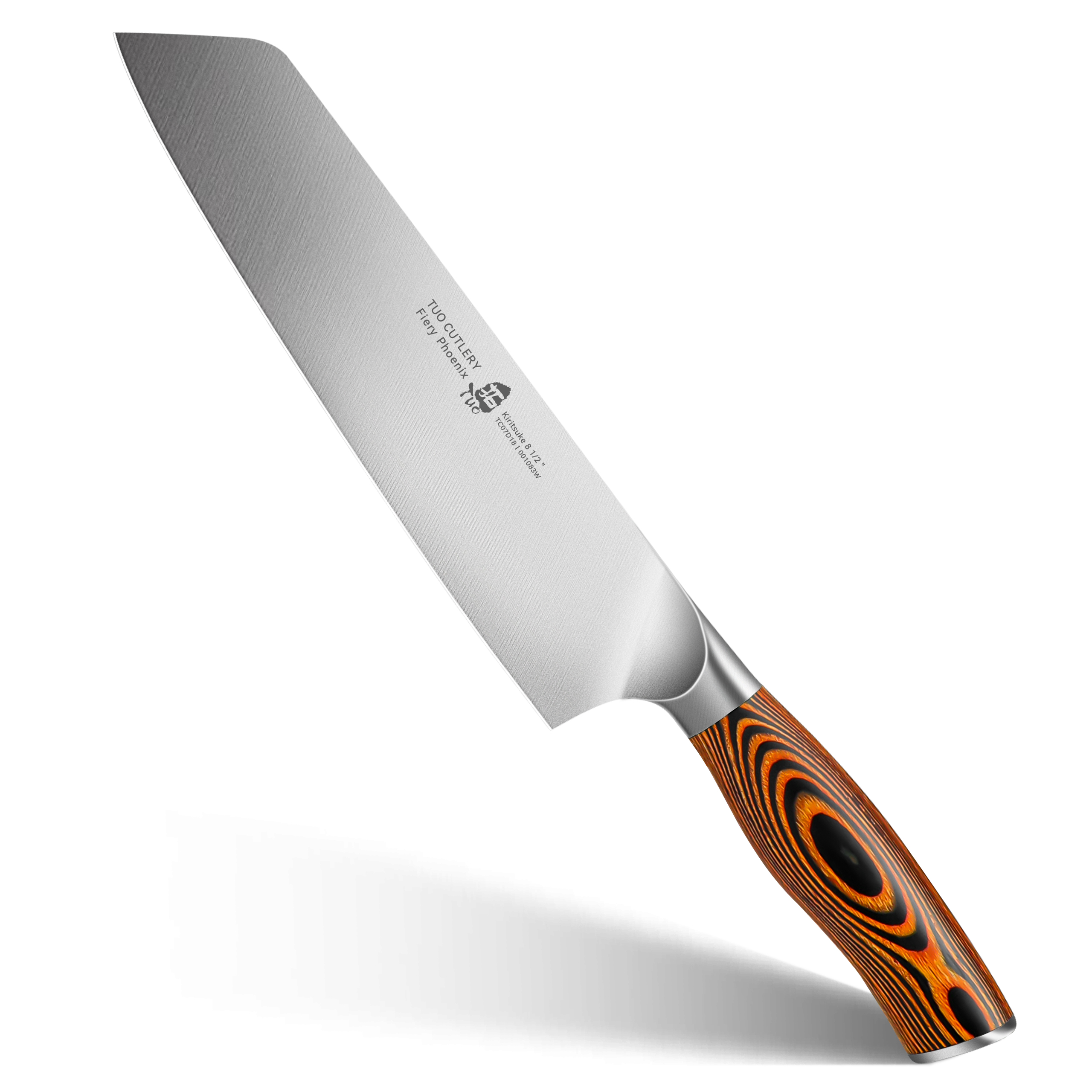
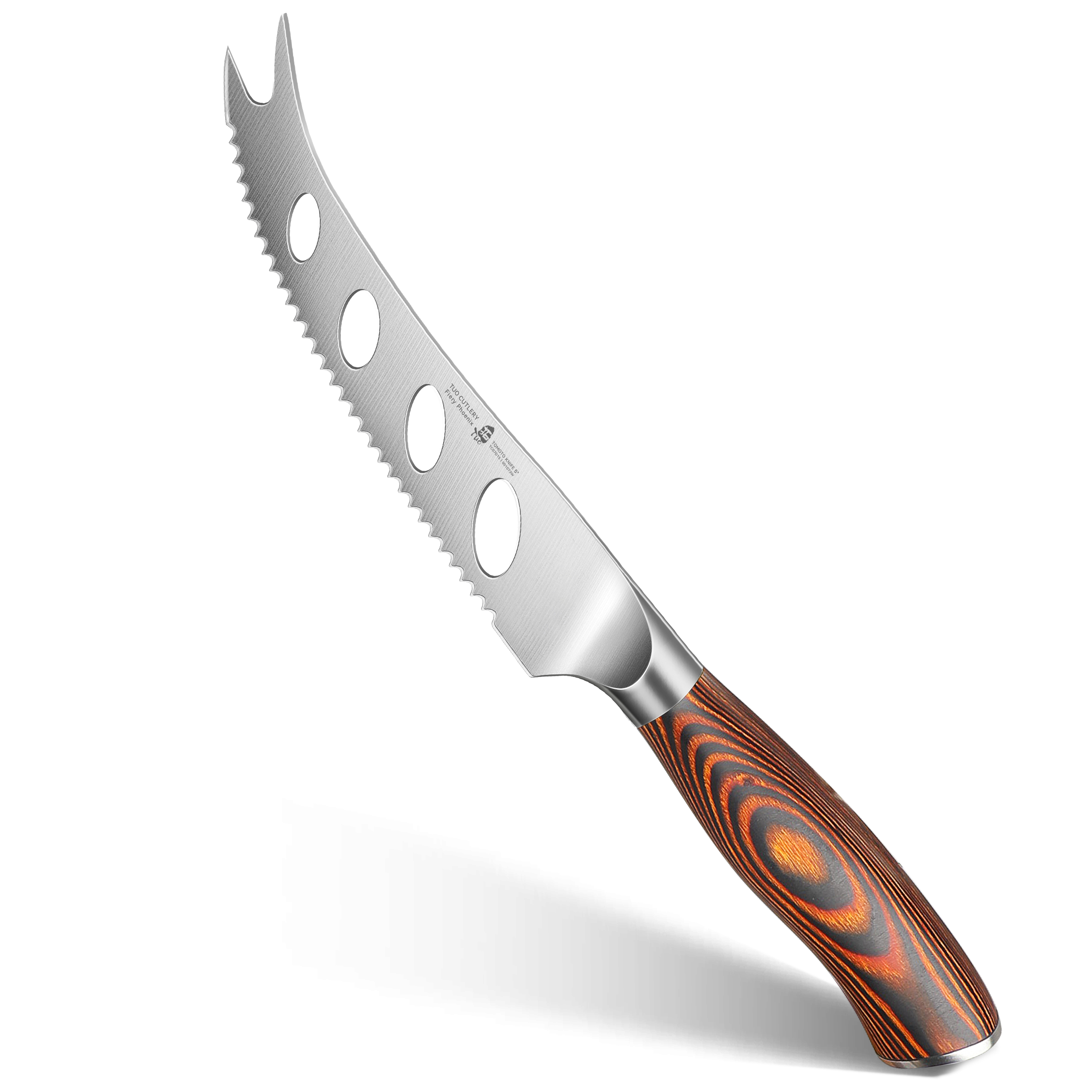
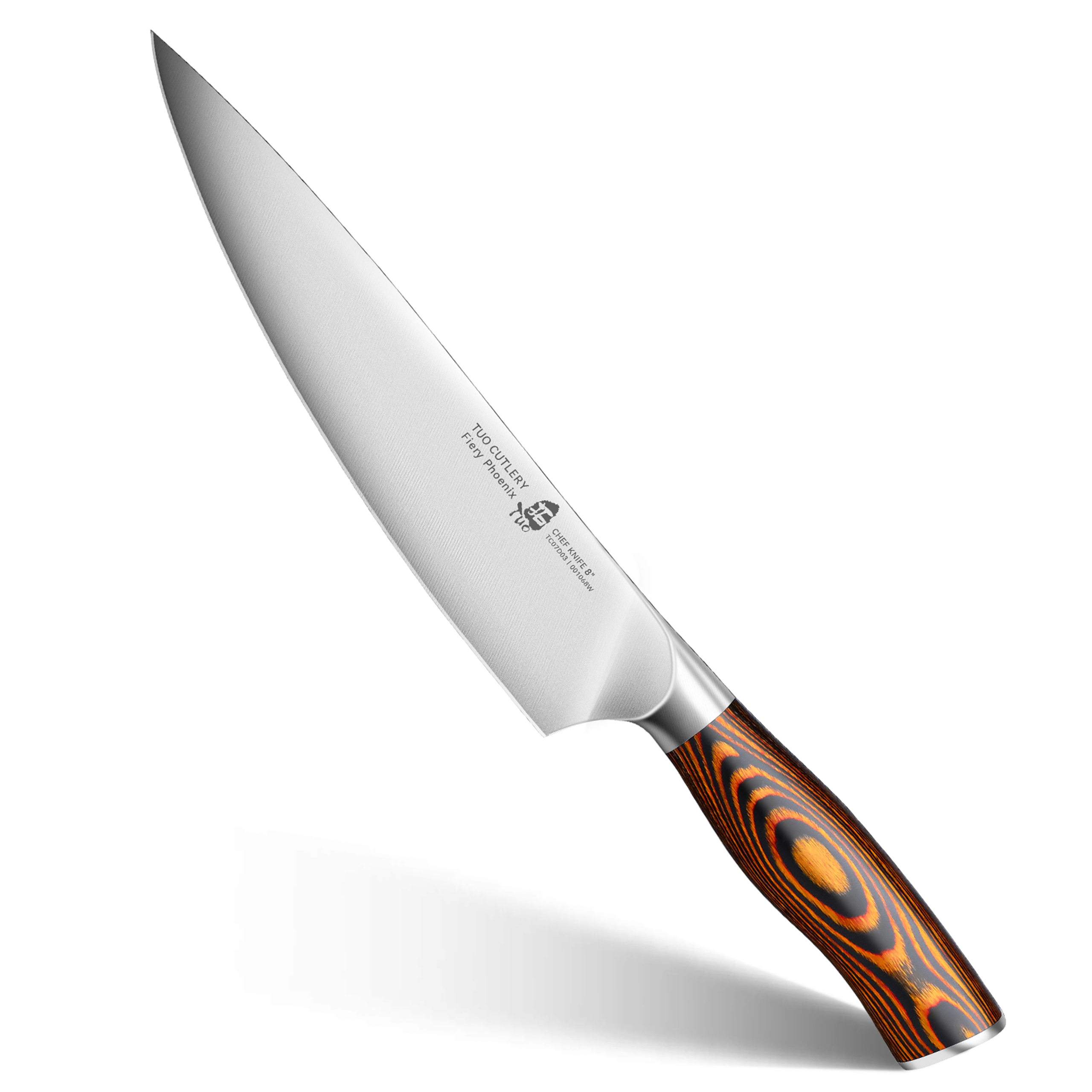
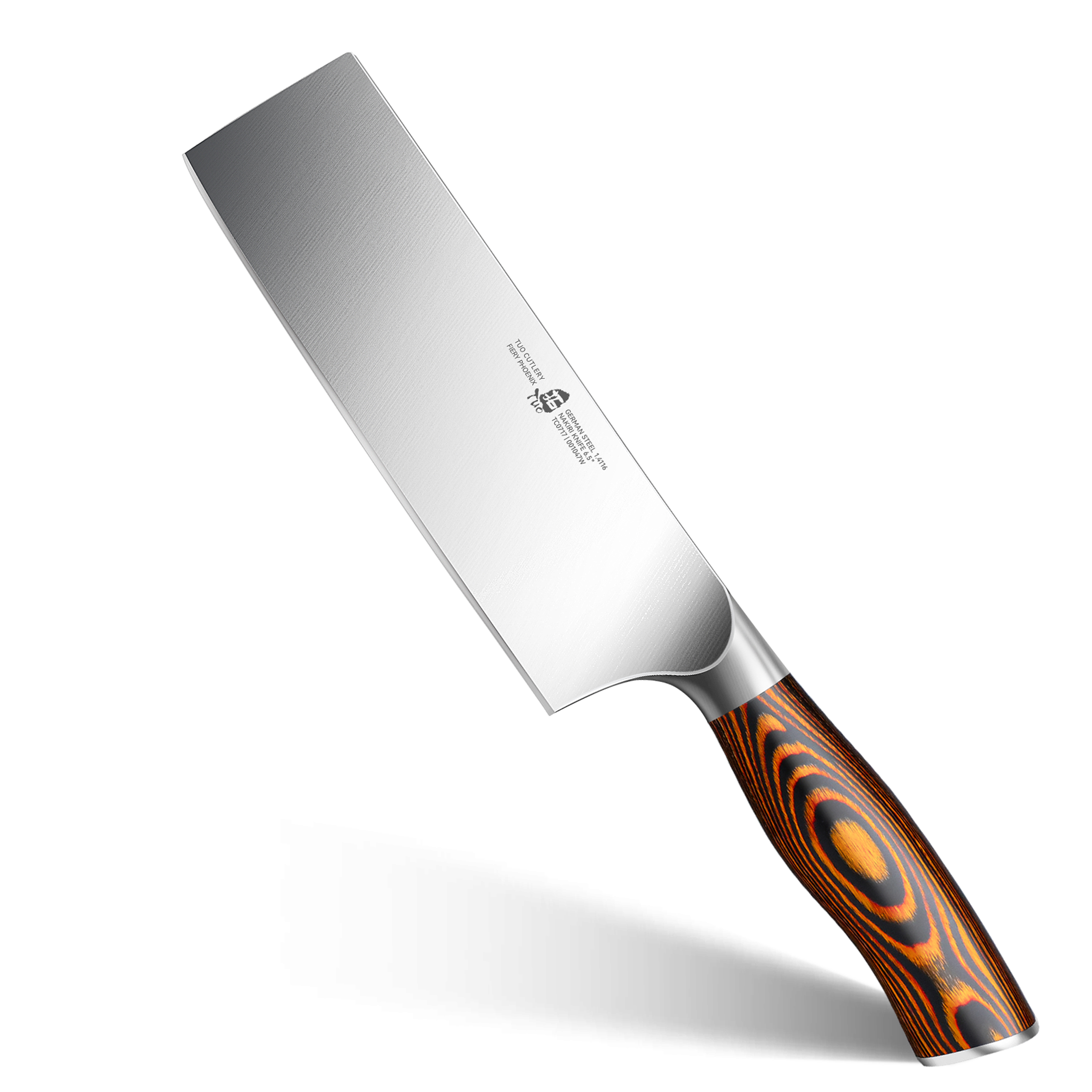
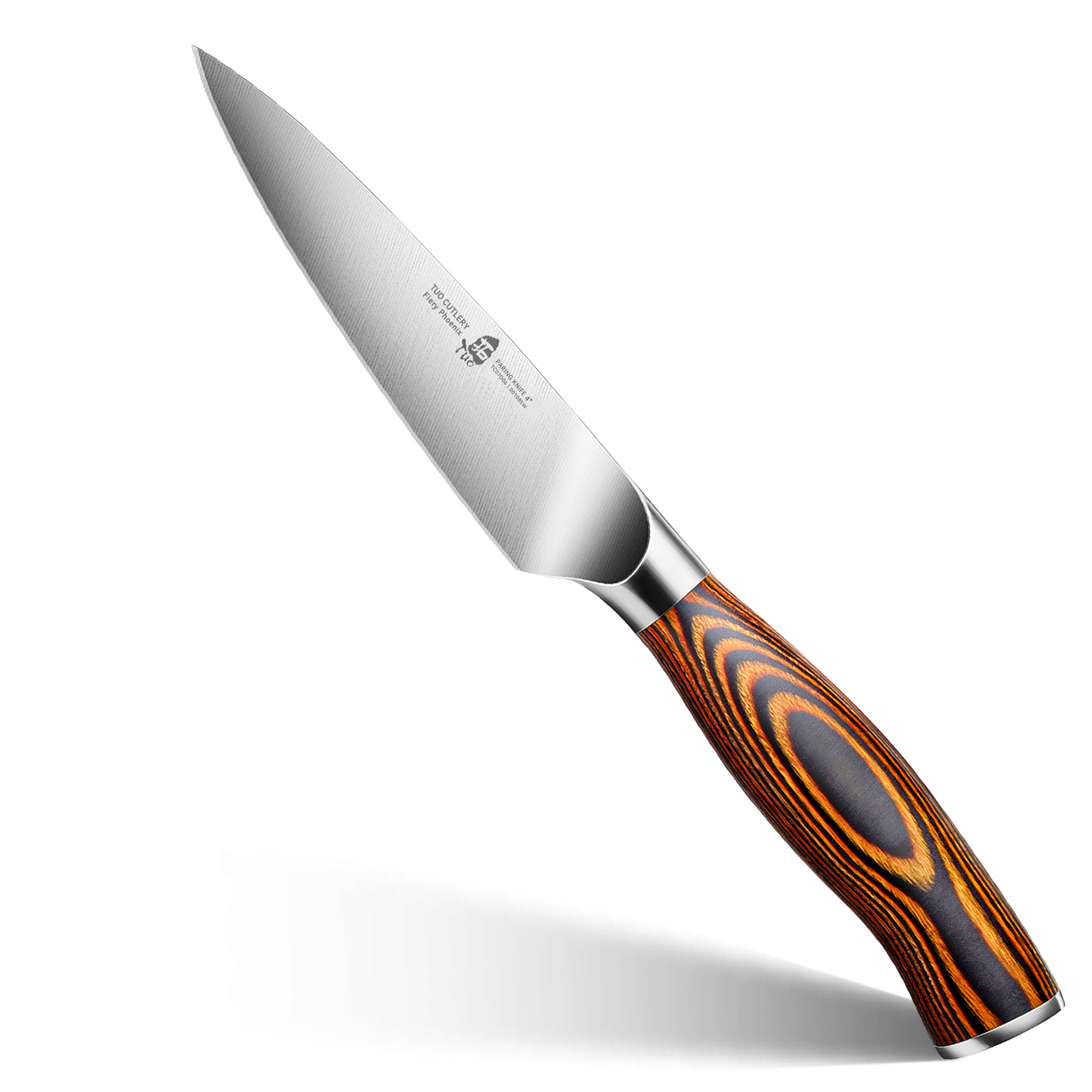
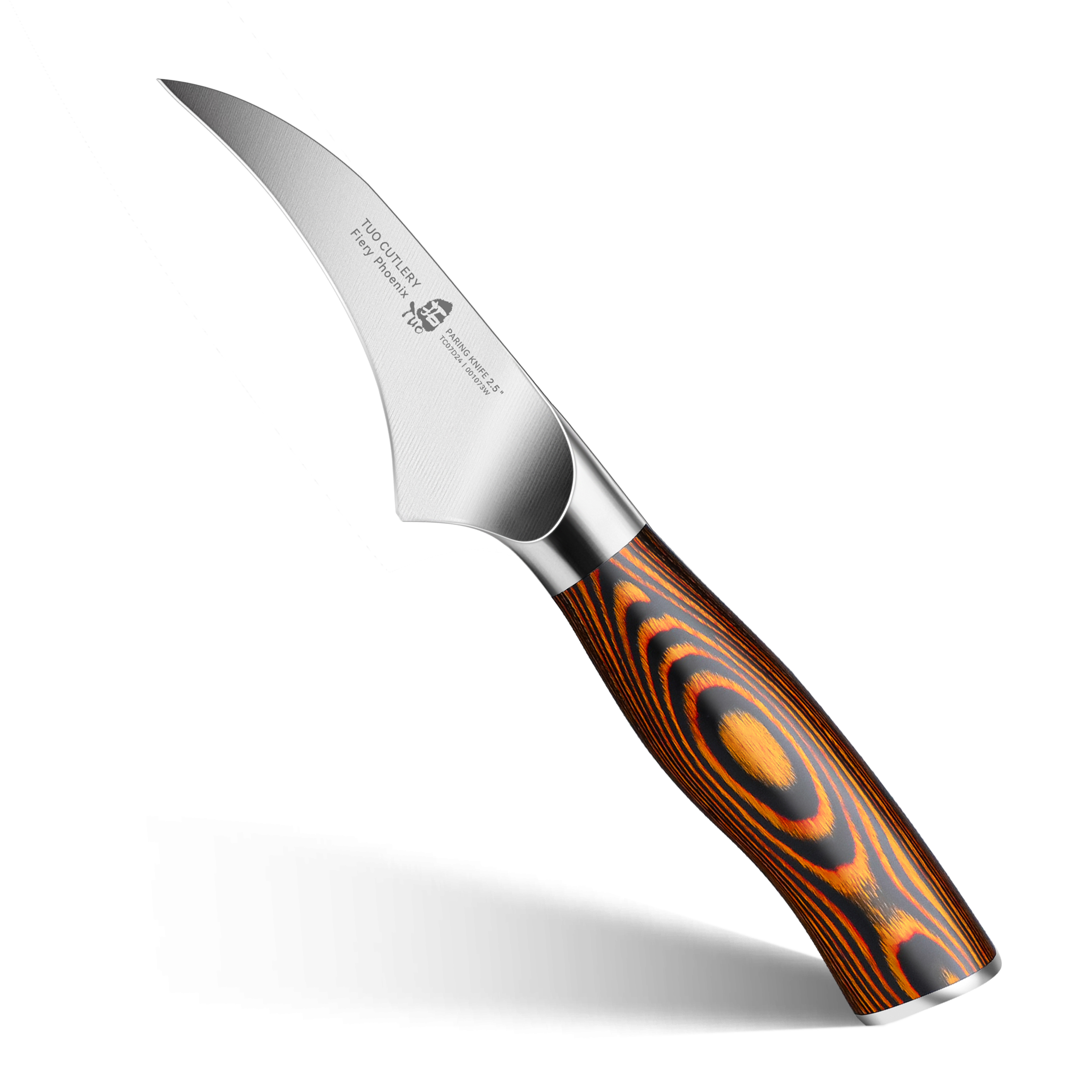
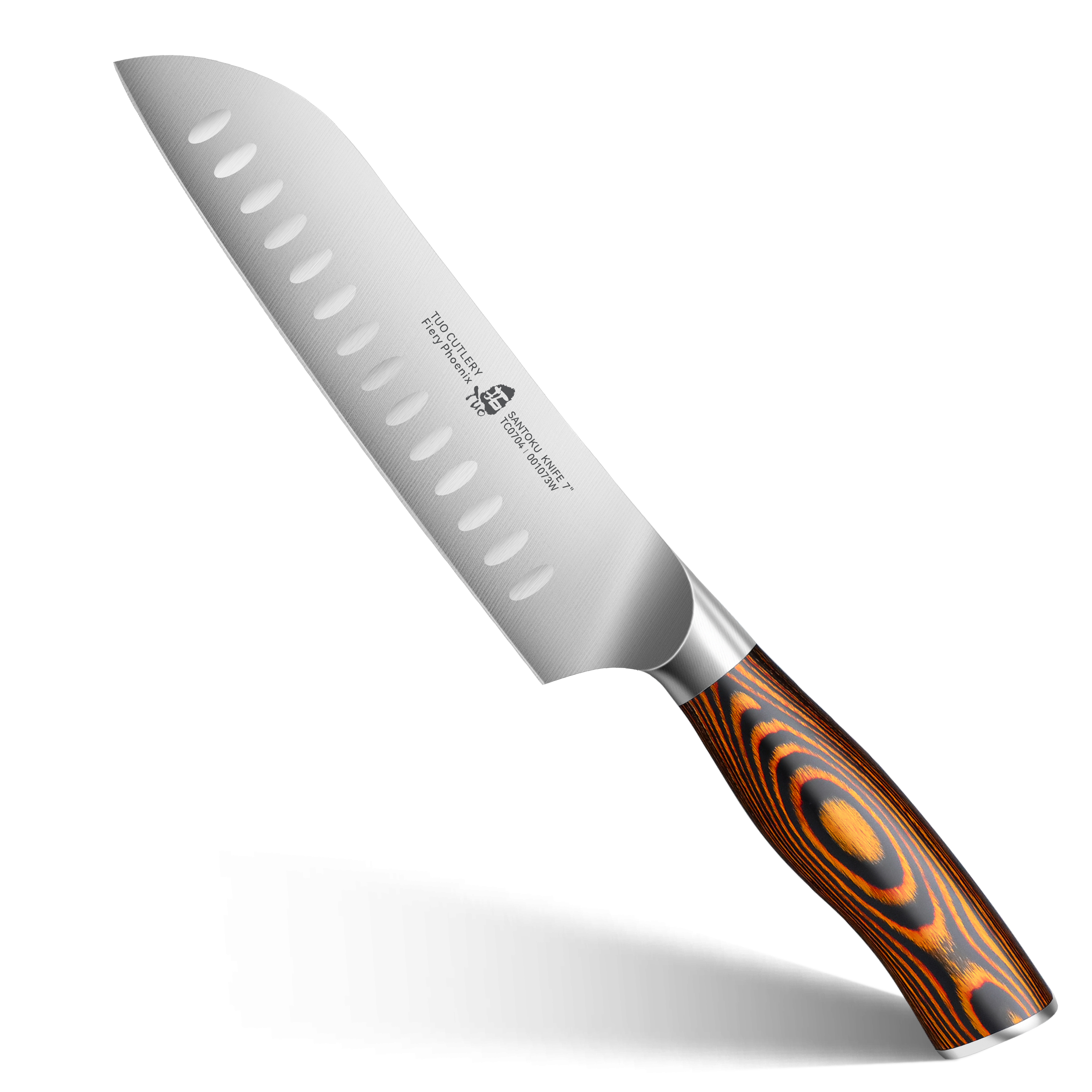
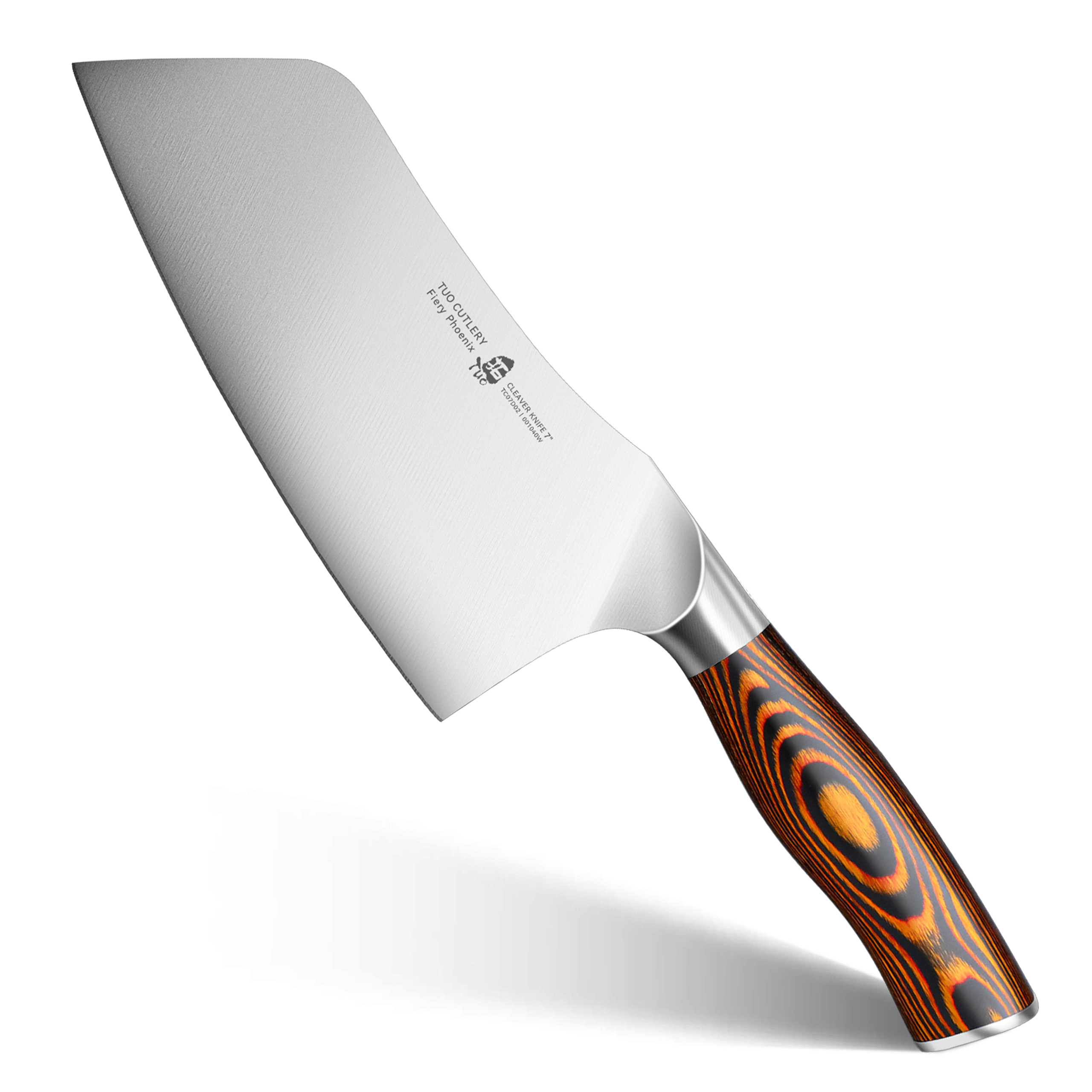
Fiery Phoenix Series